


Monnett’s End-to-End Encrypted Messaging: The Private Social Media Alternative for 2026
Published on June 12, 2026
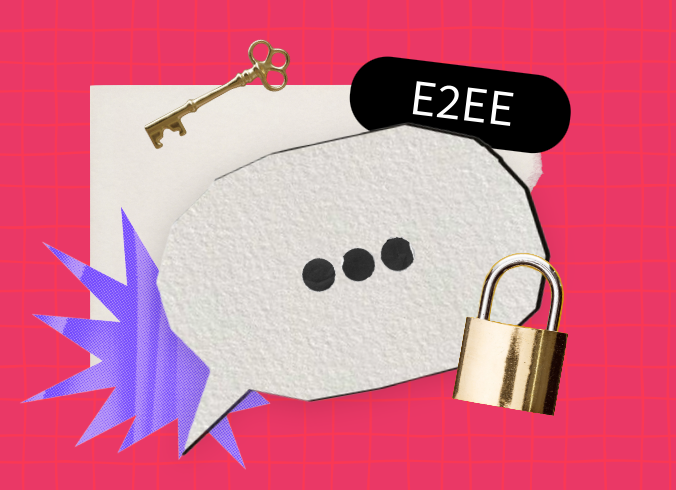
As Instagram goes dark on privacy, disabling end-to-end encryption on Instagram, we are betting that people still want a social network that can’t read the conversation between them and their best friend.
On May 8, 2026, one of the world’s most widely used messaging features quietly disappeared. Instagram, who have more than two billion monthly users, stripped end-to-end encryption from its direct messages, making private conversations on the platform readable. The company’s official explanation was simply that “very few people were opting in,” a spokesperson told reporters, and so the feature was being retired.
Privacy advocates were rather less mellow about it. The Global Encryption Coalition called on Meta to reverse the decision, arguing in an April 8 open letter that “encryption is not just ‘a feature’ — it is fundamental to safety and the exercise of human rights.” The Center for Democracy & Technology went further, stating in a separate release that “without default encryption, millions of Instagram users are left exposed to surveillance, interception, and misuse of their private communications.” For its critics, the removal was not merely a product decision. It was a statement about whose interests Meta’s platform ultimately serves.
Nature abhors a vacuum, and so Monnett, a European social network, is filling this void with the proposition that the messages you send should be readable only by the person you sent them to. No exceptions.
What Is End-to-End Encryption, and Why Does It Matter?
For the unfamiliar, end-to-end encryption (or E2EE) is not a particularly exotic concept. When a message is end-to-end encrypted, it is scrambled before it ever leaves your device and can only be unscrambled by the device of the person you are messaging. The platform carrying it, in this case, Monnett, handles only a locked box. It has no key. Even if its servers were breached, there would be nothing useful to hand over. The message content, in transit and at rest, is ciphertext: meaningless to anyone but the intended recipient.
This is, incidentally, how Signal has always worked. It is how iMessage works on Apple devices. It is how WhatsApp works, technically, even while belonging to Meta, a tension that has attracted no shortage of scrutiny. What makes Monnett unusual is not the encryption itself, which relies on well-established cryptographic protocols, but the context in which it appears: a full social network, complete with profiles, feeds, and where private messaging is encrypted by default, with no opt-in required.
How Monnett’s End-to-End Encryption Messaging Works in Practice
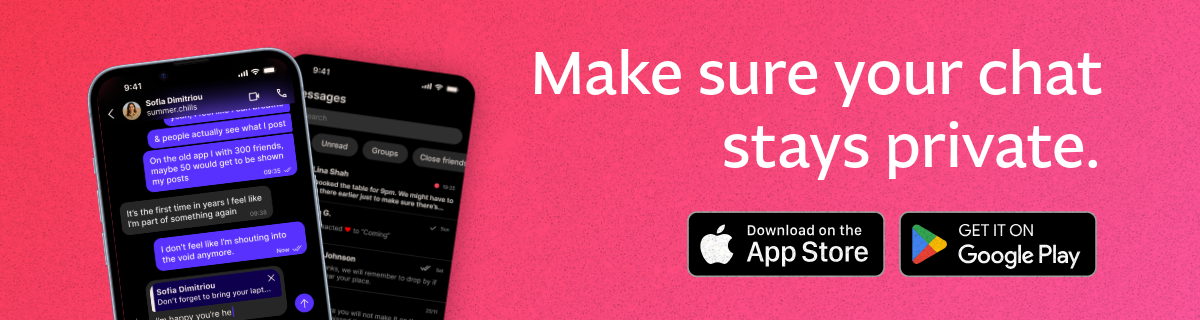
Open the app, start a conversation, send a message. That is more or less the experience. Behind it, Monnett’s architecture ensures that messages are encrypted on the sender’s device before they are routed through the company’s servers to the recipient who is able to decipher the message.
The encryption is on by default. You do not need to navigate to a settings menu, toggle a switch, or understand what a key exchange is. This is a meaningful distinction. Instagram’s E2EE feature, before it was discontinued, was opt-in only and, by Meta’s own admission, so buried in the interface that adoption remained vanishingly low. Monnett has made a different choice: privacy as the floor, not the ceiling.
Why End-to-End Encryption on a Social Network Is So Rare
It is worth asking why end-to-end encrypted messaging on a social platform is, even now, as uncommon as it is. The answer comes down to a simple commercial reality: encryption is bad for the advertising business.
Meta, Google, and TikTok are not, at their core, social companies. They are advertising companies that operate social platforms. Their revenue depends on knowing things about their users and selling access to that knowledge. End-to-end encryption forecloses a significant portion of that data. A platform that cannot read your messages cannot use those messages to build a profile, refine a target, or sell an impression. For companies whose product is, in a meaningful sense, the targeting itself, E2EE is not merely inconvenient. It is structurally incompatible with the core revenue model.
Who Still Encrypts Your DMs in 2026?
For everyone trying to navigate the current landscape, a useful comparison.
| Platform | E2EE in DMs? | Notes |
| Monnett | ✅ Yes — default | Encrypted by default; no opt-in required |
| Signal | ✅ Yes — default | Widely considered the gold standard for secure messaging |
| ✅ Yes — default | E2EE by default; owned by Meta | |
| iMessage | ✅ Yes — Apple devices | End-to-end encrypted between Apple users; SMS fallback is not |
| ❌ No | Removed May 8, 2026; messages now accessible to Meta | |
| TikTok | ❌ No | Cites youth safety as rationale; messages accessible to platform |
| Facebook Messenger | ⚠️ Partial | Default E2EE rolled out in 2023; some features excluded |
The list of platforms that encrypt by default remains short. What distinguishes Monnett from Signal and WhatsApp is the social layer: a feed, a following, a public presence — and a private inbox that only you and your recipient can read.
Privacy by Design: The European Angle
Monnett is, by design and by domicile, a European product. It operates under the General Data Protection Regulation, which grants European users extensive rights over their personal data: the right to access it, the right to correct it, the right to have it deleted. These are not aspirational principles; they are enforceable legal obligations.
But Monnett’s aim goes beyond mere regulatory compliance. There is no algorithm designed to maximize engagement by surfacing the most emotionally activating content in users’ feeds. What people see in their Home page is a chronological order of posts from accounts they have chosen to follow, a model that predates, and explicitly rejects, the attention-harvesting architecture of the major platforms.
The business model relies on memberships rather than data. People pay; the product is the service, not the user. It is a straightforward trade, and one that makes end-to-end encryption far more feasible. A company that does not profit from knowing the contents of your messages has considerably less incentive to find ways to read them.
Conclusion: A Different Kind of Social Network
The departure of end-to-end encrypted messaging from Instagram is not, in isolation, a catastrophe. Most Instagram users, as Meta itself noted, had never turned the feature on. But it is a signal, and signals accumulate.
For users who have arrived at the conclusion that the major platforms’ interests and their own are not aligned, that a social network which profits from attention and data is not on their side, Monnett represents a different kind of proposition. Smaller, quieter, without the algorithmic amplification that makes the large platforms alternately compelling and exhausting. But encrypted, by default, in a way that its larger competitors either cannot or will not match.
The app is available on the App Store and Google Play. For the growing number of people who want privacy on social media, Monnett is the place to be.
Frequently Asked Questions
What is end-to-end encryption in a social media app?
End-to-end encryption means that a message is encrypted — scrambled into unreadable data — on the sender’s device before it leaves, and can only be decrypted on the recipient’s device. The platform in the middle, no matter how it is compelled or compromised, handles only ciphertext. It cannot read the messages, and neither can anyone else. In a social media app, E2EE applies this principle to direct messages, ensuring that private conversations remain genuinely private.
Is Monnett’s messaging private and encrypted?
Yes. Monnett applies end-to-end encryption to all direct messages by default. Users do not need to opt in, enable a feature, or adjust any settings. Messages are encrypted before leaving the sender’s device, routed as ciphertext through Monnett’s servers, and decrypted only on the recipient’s device. Monnett’s servers never hold readable message content.
Which social networks use E2EE for DMs in 2026?
The field has narrowed considerably. Signal remains the benchmark — encrypted by default, open-source, and operated by a nonprofit. WhatsApp offers default E2EE, though its ownership by Meta has led some users to seek alternatives. iMessage encrypts messages between Apple users. Monnett encrypts all direct messages by default. Instagram removed its E2EE feature on May 8, 2026. TikTok has never offered end-to-end encrypted direct messages.
What happened to Instagram’s encrypted messages?
Meta discontinued end-to-end encrypted direct messages on Instagram effective May 8, 2026. The company stated that very few users had opted in to the feature, which was never enabled by default. Following the change, Instagram DMs are no longer protected by E2EE, meaning message content is accessible to Meta’s systems and can be provided to third parties in response to legal requests. Users seeking encrypted DMs on Instagram were directed to switch to WhatsApp.
Join 100,000+ people
Be a person, not a user. Sign up and invite your friends to join you!
Related Articles
September 1, 2026
March 4, 2026
June 12, 2026