
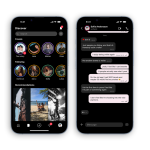
Monnett Beta is Coming This March: A Kinder Social Media for Everyone!
March 6, 2026If you’re in your 20s and you’ve ever felt that weird mix of addicted and annoyed by the main social apps, you’re not alone. But let’s skip the usual complaints and get to something bigger: what happens when the digital town square you use every day isn’t really yours? When the rules, the data, and the power sit in boardrooms thousands of miles away?
That’s where Monnett steps in, and honestly, it’s starting to feel like one of those rare things that could matter way beyond likes and stories.
Picture this. Europe has spent years passing laws like GDPR, the Digital Services Act, and the AI rules to claw back some control over Big Tech. Those laws are great on paper, but they still depend on foreign companies playing nice. What if there’s a real European platform that millions of people actually use as their go-to spot for news, protests, debates, and just talking to friends? Suddenly Europe isn’t just regulating from the outside; it owns a piece of the infrastructure.
Monnett launched in Luxembourg late last year and already crossed 50,000 users in its early alpha phase, with daily active people hitting 10,000 at peaks. The team is prepping the beta for this spring (yep, we’re talking March/April 2026 vibes), and they’re on track for a bigger public launch by summer. No massive hype machine behind it yet, just steady growth because people want something different: no sneaky algorithms deciding what you see, no surveillance ads, full control over your feed, and strict European privacy rules baked in from day one.
Now zoom out. If Monnett keeps growing and hits serious scale (eyeing 1 million+ by end of year), it stops being “just another app.” It becomes actual civic infrastructure. Think about it:
- In a crisis or election season, if dominant platforms throttle content or get hit with coordinated junk, a sovereign European alternative stays up and under EU law. No waiting for some overseas company to decide.
- Your data stays in Europe, protected by courts you can actually reach. That’s huge for journalists, activists, politicians, anyone who doesn’t want their private messages turned into someone else’s leverage.
- The design fights polarization on purpose. Less addictive doom-scrolling means healthier conversations, which makes it tougher for foreign influence ops to game the system.
This isn’t defense tech in the missile sense, but it’s information defense. It’s the digital equivalent of having your own roads, your own power grid, your own phone network. When the stakes are high (hybrid threats, disinformation waves, or just keeping open debate alive), having a home-grown option isn’t nice to have; it’s essential.
The beta dropping soon is the real test. Early access already feels solid, and if enough people jump in, test it, share it, and help it scale, Monnett could quietly become the thing that gives Europe real digital independence.
So yeah, if you’re tired of feeling like a guest in someone else’s house online, give Monnett a look. Download it, poke around, see if it clicks. Because if it takes off, we’re not just getting a nicer feed; we’re getting a small but legit shield for the open society stuff we say we care about.